Thursday, 3 September 2026

Modiolastrum lateritium

Modiolastrum lateritium
An easy-going and cheerful creeping mallow from temperate eastern South America, with loads of 2inch pale pink flowers, zoned with red toward the golden centre, all summer. 
Modiolastrum lateritium
A reliable ground cover for a sunny well-drained spot that doesn't get out of hand. Hard frosts may kill the top growth but it'll usually come back from the roots.
£10

Wednesday, 2 September 2026

A New Start

dismantling the old site
It's been one heck of a summer - given 2 months to get out back in April, I actually didn't officially leave until August. Four months, four heat-waves, every moment my brother and I could spare digging up plants, potting them up, dismantling the tunnel and the greenhouse (sadly not the shed though, which I really miss), and hoping a new site would become available somehow. 
the new site
There were a few false dawns along the way, but just in the nick of time a site in Patching near Littlehampton turned up, along with an extremely generous landlord who uses it for his landscaping business, and had tried a couple of times before to get a nursery going. 
one of many van-fulls
So mum helped out by paying for van hire to take as much as possible to the new site. Lots of people stepped up to help and I'm immensely grateful. I've had to leave some very rare specimens behind, as well as my poor old shed, but it's mostly there now and I've been spending the last month or so keeping everything alive and attempting to make sense of the chaos. 
moving big pots - rails borrowed from tunnel
Needless to say some things have suffered from being moved at the wrong time but it's remarkable how well most have coped - especially a large Chamaemespilus alpinus which barely flinched, and an Aesculus pavia rosea nana which dropped its leaves but has already produced new ones since. Both had major roots severed and are in huge pots. Very few things have completely died so far. One interesting problem is the number of plants that are dormant and unlabelled (Arum, Fritillaria, Cyclamen etc). It's going to be a real lucky dip sorting them out. 
the new site
The main job for the immediate future is clearing space for the tunnel and getting that erected in time for the less weather-resistant types to survive the winter, then there'll be a new shed to build, new plantings in the ground for things that don't like being in pots (Paeonia especially) and areas for stock outside. At the same time I want to keep on top of packing and sending orders, and propagating and potting on new stock, plus at the same time still doing people's gardens to earn a crust. It's going to be neither quick nor easy, but I'm optimistic. 
the new site
So anyway, I've just added some new things to the catalogue and I'm still taking orders. Thanks for your patience.

Oxalis oregonum

Oxalis oregonum
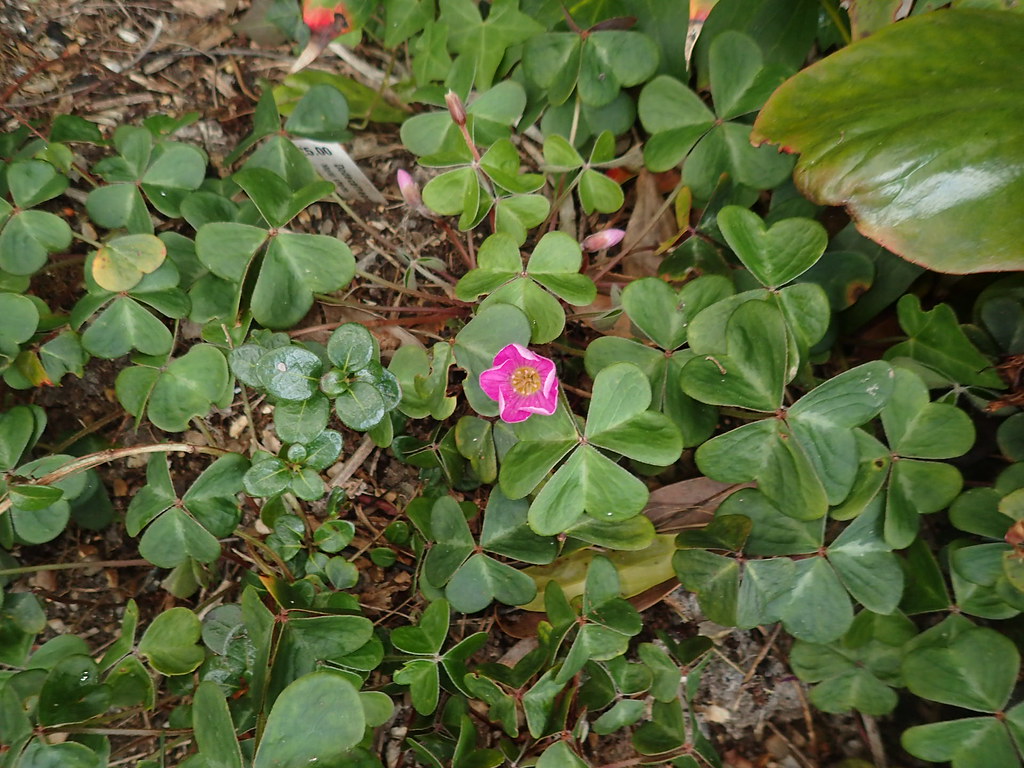
A very striking woodland species from western USA, with vivid pink flowers over somewhat shiny lustrous green leaves. A bit like our native wood sorrel (O.acetosella) but two to three times bigger in all parts. 
Oxalis oregona
This is a remarkably pretty creeping plant that is not deep rooted or weedy, but runs on rhizomes just on or under the surface. Best of all it's an excellent addition to the list of plants that thrive in dry shade (as do many western US plants) making a nice solid ground cover even under evergreen shrubs.
£8

Tuesday, 1 September 2026

Homalomena erubescens

Homalomena sp.
It’s not often I sell houseplants, but I happen to have a few of these south-east Asian aroids about the place. It’s proved a ridiculously easy thing to grow – very like one of the red tinted Philodendrons with big hastate dark leaves on red stems, but on a stout stem rather than climbing. 
Homalomena sp.
From time to time, clusters of ‘flowers’ appear under the leaves, each made up of a deep red spathe with a milky white spadix poking out. Each inflorescence is short-lived but there’s a succession of them over several days. 
Homalomena sp.
Ordinary room temperatures and medium light are fine, and they don’t seem to need high humidity to look good. 
Mature plants in 3L pots ~ £15

Hypericum ascyron

Hypericum ascyron
A very striking herbaceous perennial from North America with substantial and shapely rich golden flowers in summer on upright green leafy stems up to 12ins high. 
Hypericum ascyron
New to me but so far easy and adaptable and not at all weedy. 
£8

Saturday, 29 August 2026

Salix myrtilloides Pink Tassels

Salix myrtilloides Pink Tassels
A very cute little Himalayan willow (see the wood anemones there for scale) - inconspicuous most of the time, but the pinky purple catkins are very striking - complementing winter flowering heathers well and lovely with Narcissus species. 
Salix myrtilloides Pink Tassels
A naturally picturesque gnarly alpine shrub - I've found it more adaptable in our increasingly dry south-eastern climes than other dwarf Salix. 
£12

Viburnum brevitubum CBCH807

Viburnum brevitubum CBCH807 
A beautiful new evergreen species for our gardens with masses of milky-white trumpet flowers and smart red-tinted bracts, new leaves and stems. The leaves are narrow and nicely textured and of a satisfying glossy mid-green - not at all dark and heavy in any way. Not scented unfortunately.
Viburnum brevitubum CBCH807
Flowers freely and for a long time from early in the year, and unaffected by frost so far (that might change if we had any proper frosts however). Another one from Pépinière Aoba that I got in just before brexit. 
£16

Friday, 28 August 2026

Phymosia umbellata Aubergine

Phymosia umbellata
A Mexican mallow with very dark glossy bell-shaped flowers in chunky green calyces. It may or may not be darker than other forms in cultivation, but I like the name because the flowers really do look a lot like aubergines. Photos of similar plants online look a lot more red. People who like black flowers (and who doesn't?) should definitely grow it.
Phymosia umbellata
Anyway it's my seedling so I'm naming it 😁  It's very photogenic.
Phymosia umbellata Aubergine
In other respects it resembles other malvaceous shrubs like Abutilon and Lavatera and grows to about 6ft tall and across.
Phymosia umbellata
Hardiness is uncertain but it'll take some frost - probably safest fairly dry at the roots and in full sun, against a wall, or in a pot brought in for the winter. 
£16


Thursday, 27 August 2026

Berberis insolita

Berberis insolita
Berberis have a bit of a bad reputation for being dull and shapeless. The flowers are nice but the overall look of the plant can feel oppressive. This species though challenges that description by being graceful and elegant, with fresh willowy leaves, and quite large pale greenish cream flowers. It's really very pretty.
Berberis insolita
It does of course have the usual savage thorns, but it's also, like most Berberis, extremely hardy and adaptable. Highly recommended. I sneaked this one in under the wire from AOBA in France just before the brexit wall came down.
£16

Wednesday, 26 August 2026

Correa Poorinda Mary

Correa Poorinda Mary
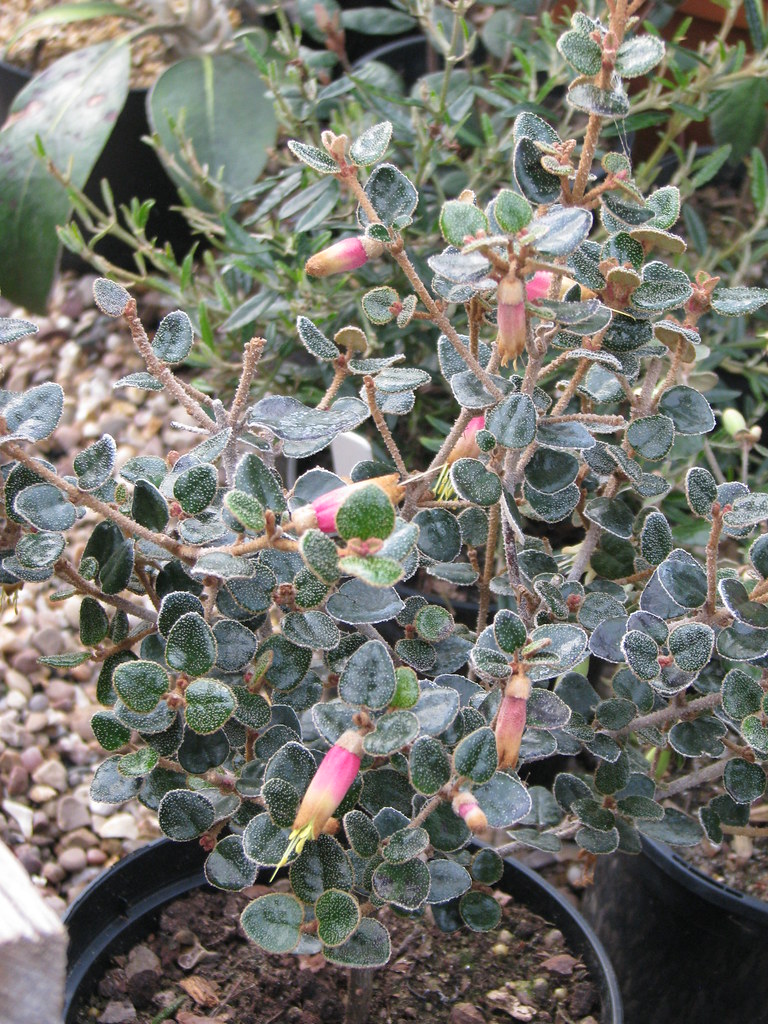
A very neat and unusual variety with rounded scurfy leaves on a low spreading shrub. The flowers are a rich bright pink with a brownish tinge. For those in the know it looks like one of the more unusual pink-flowered lawrenciana has been crossed with nummularifolia. 
Correa Poorinda Mary
Not much tested for cold but definitely fine in maritime gardens here in Sussex. Correas do well in dry semi-shade and well-drained sunny sites.
£16

Monday, 9 February 2026

The end of Brighton Plants, or the start of a new chapter?

nursery
Well - it's happened - I have to vacate the nursery land in 2 months, as of yesterday. 
Not sure exactly what to do next, although I knew this might happen eventually. 
I don't think it's sunk in yet. I have some ideas. 
I don't want to give it up. I was hoping to be running Brighton Plants into my retirement in 4 years time. 
Thinking about all the plants in the ground there - some really rare things. The trees and larger shrubs will have to be left behind. The land will be developed so no doubt they'll be killed. I'll rescue what I can. 

The main problems will be having the money and energy to start over at 63. I'm barely keeping on top of it one day a week as it is. There's an immense amount of stuff to move - not just plants - the tunnel, the greenhouse. My body is aching all the time now (all the men in my family get 'arthritis') and I need to sleep far more than I used to. And of course I have no savings. 
I have a couple of ideas for new premises but I need to make enquiries. 

Anyway I'm not ready to give up just yet. Any ideas and encouragement will be appreciated.

Hypericum aegypticum

Hypericum aegypticum
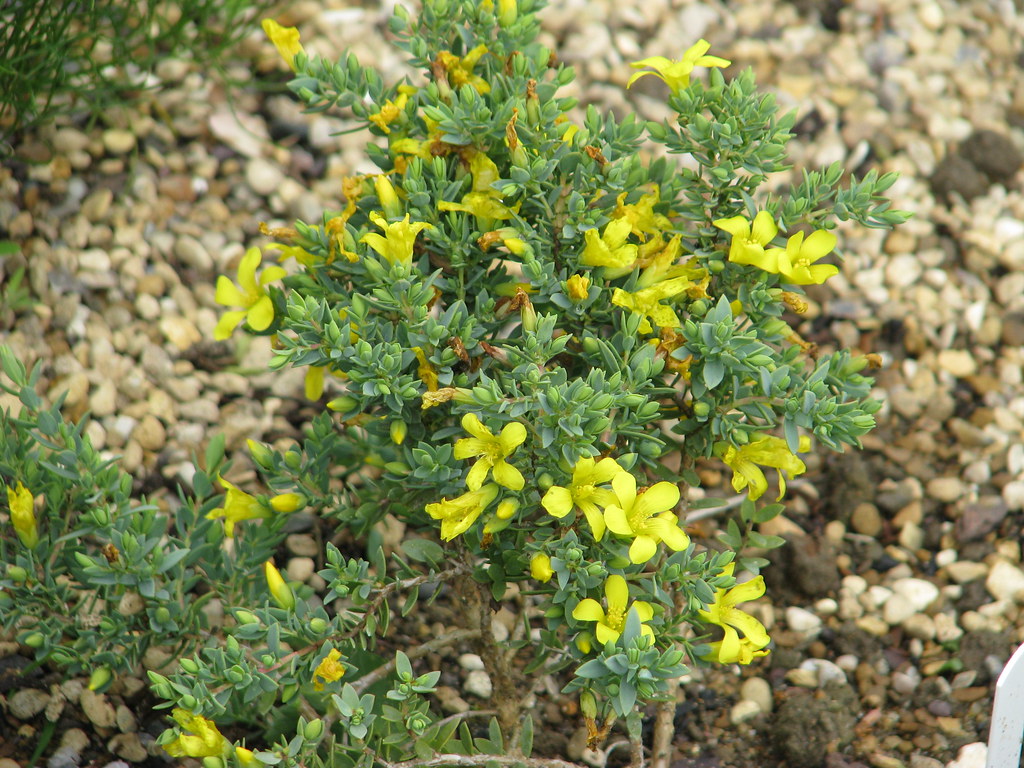
A terrific small shrub, looking more like a tiny shrubby Linum than a Hypericum – the flowers are a soft pale yellow, more or less funnel-shaped, and set among tiny grey leaves. 
Hypericum aegypticum
Hardy here for many years in a sunny dry spot. Exquisite.
£8

Sunday, 8 February 2026

Yet More Plants...

I've been aware for a long time that there are some plants on the nursery that never feature on the website, either because they're not as new and exciting as others, or because I never have many of them, or in some cases because the photos I have are not great - so I never get around to posting them here. So I've decided to post them all in one big post.

Clematis songarica
Clematis songarica
A low straggling almost shrubby species producing lots of small white flowers in summer. Grows well in well-drained sunny sites. Small foliage. Fully hardy. 
Large pots, £15


Epimedium grandiflorum nanum Marchant's hybrid
Epimedium grandiflorum nanum hybrid
Some of you may know that Epimedium grandiflorum nanum is an exquisite miniature form of this popular species where the new foliage is fresh green, less than an inch across, and broadly edged in maroon, and the milky white flowers, despite the tiny size of the plant, are normal size. The whole thing is only a couple of inches tall. 
Epimedium grandiflorum nanum hybrid
Sadly it also has a reputation for being difficult to keep - I've had it and lost it twice. This is why I was so pleased when I came across this at Marchant's Hardy Plants a few years ago. Its a bit bigger than nanum - about 5ins high but more vigorous and easy to keep. In every other respect it seems identical. It is still slow to increase though so I'll only ever have a few small plants to sell.
sold out for now


Glycyrrhiza yunnanensis
A striking tall perennial in the pea family with attractive pinnate leaves and dense heads of violet flowers in summer – like mauve clover heads. The main effect though is in autumn and winter when the russet red stems and bristly seed heads stand over 6ft tall. 
Glycyrrhiza yunnanensis
Completely weather-proof - an excellent feature in the winter border. Very hardy and adaptable.
£12


Keiskea japonica
Keiskea japonica pink form
Plants that flower late into autumn are always worth having and there are a number of late season Lamiaceae (mint family) from eastern Asia that are far too little grown in the UK. Colquhounia, Leucosceptrum, Elscholzia and Rostrinucula are three that I grow, and this is another. 
Keiskea japonica
Keiskea are from Japan and make attractive bushy herbaceous perennials to about 4ft tall with spikes of palest pink flowers in October. Adaptable and completely hardy. Now apparently included in Collinsonia
£16


Klasea bulgarica
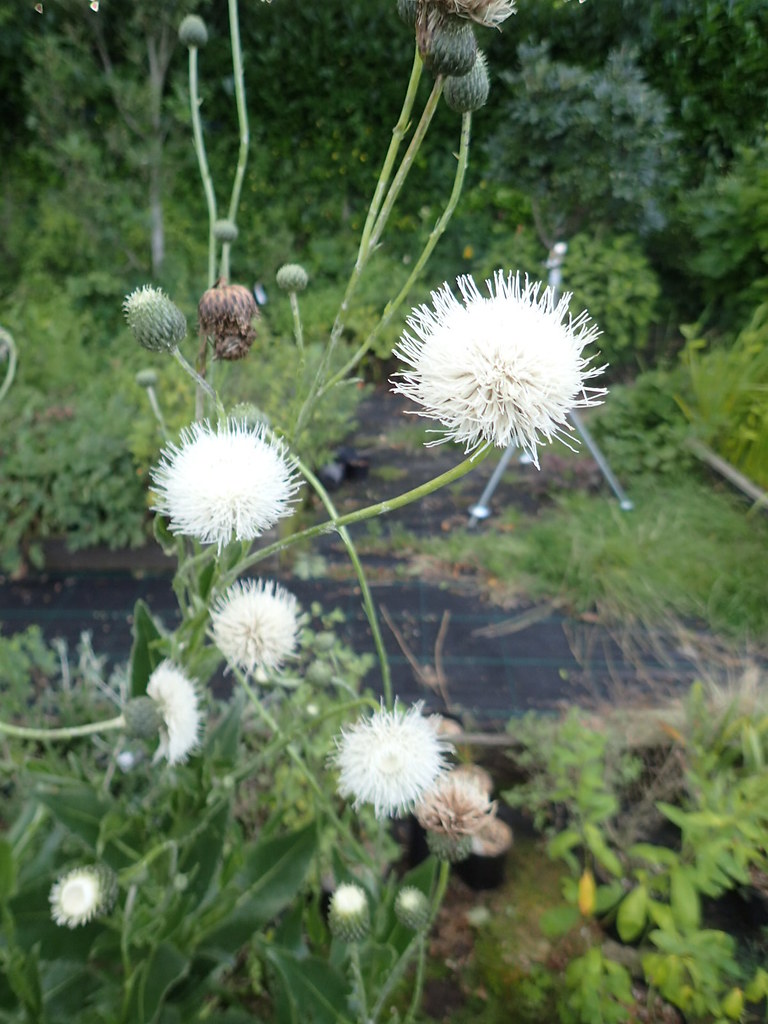
Klasea bulgarica
A wonderful tall Centaurea-type plant growing to well over head height with glossy serrated leaves and clear white flower heads. Fabulous among low-growing plants in full sun on any well-drained soil.
£12


Leucosceptrum canum
Leucosceptrum canum
A remarkable Buddleja-like shrub from the foothills of the Himalayas, where it is quite common and widespread. The foliage is soft and broad and pale and the flowers, which are produced very late in the year, are slender creamy white bottlebrushes. 
Leucosceptrum canum
The combination is rather striking and unusual. Best with some shelter and not too dry here - the way you might grow Colquhounia.
£16


Lonicera hispidula
Lonicera hispidula
The Californian Pink Honeysuckle - ideal for drier, sunnier or shady conditions, where a lot of the more familiar types tend to get mildew. The foliage is rounded and somewhat fuzzy and, in the population from which these seeds were collected (thanks again Dennis), somewhat marked with irregular maroon-black splotches, especially when young and in winter. The pink flowers are held in dense heads in summer and may be followed by red berries.
£18

Buddleja paniculata
Buddleja paniculata
An attractive spring-flowering form with clusters of soft mauve flowers and pale felted oval serrated leaves. Needs shelter from harsh winter weather but otherwise hardy here.
£16

Even More Plants...

Lunaria rediviva
Lunaria rediviva
A perennial relative of the popular annual honesty with pale blue flowers and oval seed pods. Very pretty and long-lived.
£8


Mirabilis longiflora
Pelargonium endlicherianum and Mirabilis longiflora
A glorious night-scented species - the fragrance redolent of tropical evenings. (The very long-tubed white flowers are typical of plants pollinated by moths.) A low spreading perennial with rather sticky green foliage. 
Mirabilis longiflora
I originally assumed it would need a dry winter but it is hardy and vigorous in the border at the nursery. In colder, wetter climates it would also be fabulous in a big terracotta pot on the patio, right next to where you sit of an evening, where you can enjoy the scent with your prosecco and BBQ.
£12


Penthorum sedoides
Penthorum sedoides and Salix gracilistyla Mt.Aso
An unusual N.American perennial related to Sedum, mostly seen as a marginal/aquatic but adaptable. 
Penthorum sedoides
Leafy stems to about 10ins high, with creamy flowers in late summer. The main attraction is when the plants turn vivid golds, oranges and reds in autumn.
£8


Pycnanthemum muticum
Pycnanthemum cf. tenuifolium
Another North American that certainly deserves to be better known. Forms colonies of upright stems with fresh green rounded leaves ultimately developing an almost Euphorbia-like inflorescence of tiny white flowers subtended by silvery white bracts. At this stage the whole plant has a pale silvery sheen. Not invasive. Has a lovely fresh peppermint fragrance too and can be used in the same way. Any soil.
£8


Salix bockii
Salix bockii
A very unusual willow for its summer/autumn flowering - the catkins are chalk white up to 2ins long on long slender branches covered in small oval grey green leaves. Frankly it looks nothing like a willow, but is an adaptable small to medium shrub suitable for any not-too-dry soils in sun or semi shade.
£18


Salix subopposita
Salix repens subopposita
A low-growing but vigorous shrub grown for the masses of fresh yellow catkins in early spring. An excellent ground-cover for heavy and sodden soils.
£12


Scopolia carniolica
Scopolia carniolica
Glossy dark maroon bells, pale inside, appear with the young foliage in early spring. A woodlander.
Large pots, £12


Sophora flavescens
Sophora flavescens
A herbaceous species from China with pale yellow, somewhat monk's-hood like flowers on slender stems over elegant pinnate foliage. A cool airy alternative to Baptisia and Thermopsis. Fully hardy.
sold out

Tradescantia bracteata
If, like me, you tend to prefer wild or natural-looking plants over cultivars, I think this wild spiderwort is likely to appeal to you. It's a much more graceful, slender plant than we are used to, with pale green grassy foliage and soft purple flowers over a long period in summer. Just as adaptable as the commonly cultivated types, and one of the few plants that really grow almost anywhere, dry or wet, sunny or shady.
£8


Wulfenia baldaccii
Wulfenia baldaccii
A lovely and understated alpine with rosettes of broad, fresh green leaves and one-sided spikes of rich violet flowers. Best in a sunny spot – not too dry. 
sold out

Wyethia angustifolia
Narrow Leaf Mule’s Ears. Wyethias are a bit of an enigma - they're magnificent in the alpine meadows of western North America - compact members of the sunflower fraternity with rosettes of bold foliage and big yellow or white flowers in spring. I've raised Wyethia angustifolia, elata, helenioides and helianthoides from seeds successfully. 
Wyethia helenioides
Helenioides is still with me in a raised bed - producing it's pale mullein-like leaves every spring but not flowering, while angustifolia has multiplied well and produces its golden flowers sometimes. It's the least exciting of them but rare in cultivation and would probably perform better with more water in spring. Fully hardy - full sun.
£12